
Why Is My Dog's Nose Turning Pink, Pale, or Losing Color?
TLDR
A dog's nose changing from black to pink, gray, or pale can have several causes - some harmless, some that need attention. Common reasons include "snow nose" (a normal, temporary seasonal fading), aging, contact irritation, and autoimmune conditions like Discoid Lupus Erythematosus (DLE). If the color change comes with crusting, smoothing texture, sores, or sensitivity, see your veterinarian, because early DLE looks exactly like that.
Noticing your dog's once-black nose turning pink is unsettling. Most of the time it is worth a calm look rather than a panic - but a few signs do warrant a vet visit.
Common Reasons a Dog's Nose Changes Color
1. Snow nose (seasonal hypopigmentation)
Some dogs' noses lighten in colder months and darken again in summer. It is cosmetic, harmless, and the nose stays smooth and healthy. Breeds like Labradors, Huskies, and Golden Retrievers commonly show it.
2. Aging
Noses can naturally fade with age. As long as the texture stays normal and there is no crusting or soreness, this is usually nothing to worry about.
3. Contact irritation
Plastic food bowls and some materials can cause "plastic dish dermatitis," fading the nose through irritation. Switching to stainless steel or ceramic often helps.
4. Discoid Lupus Erythematosus (DLE)
This is the one to take seriously. DLE is an autoimmune condition where the immune system attacks the skin of the nose. It very often starts as exactly this: a black nose turning pink or gray, with the normal cobblestone texture smoothing out. UV light makes it worse.
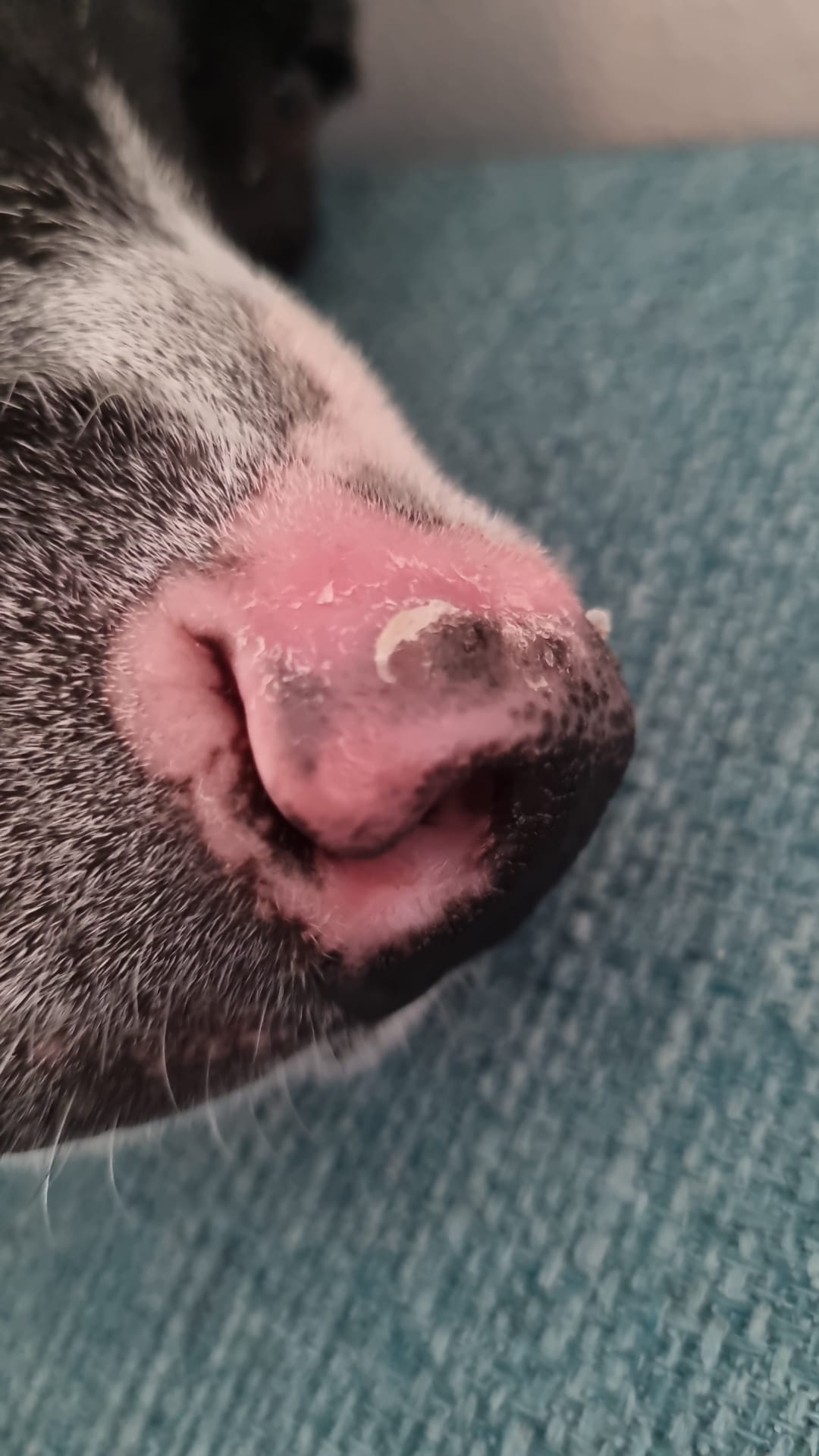
When Color Change Is a Warning Sign
See your veterinarian if the fading comes with any of these:
The nose surface loses its bumpy, cobblestone texture and turns smooth or shiny
Crusting, scaling, or flaking
Sores, cracking, or bleeding
Tenderness, or your dog avoiding sunlight
Color change that started or worsened after lots of sun
These point toward DLE or another skin condition rather than harmless fading. A vet can confirm with an exam and, if needed, a skin biopsy, which is the definitive test for DLE.
What You Can Do
If it turns out to be simple seasonal or age-related fading, no treatment is needed. If your vet diagnoses DLE, the cornerstone of management is protecting the nose from UV light and keeping any prescribed medication on the nose long enough to work.
That second part is harder than it sounds, because dogs lick anything off their nose within seconds. SnoutCover is a physical nose cover that blocks UV consistently and holds medication in place so it can absorb. It protects and supports healing - it is not a cure, and it is not a substitute for your veterinarian's care.

Want to understand the autoimmune side more deeply? Read our full guide to what DLE is, or, if you have a herding breed, our Collie Nose guide.
Frequently Asked Questions
Why is my dog's black nose turning pink?
Causes range from harmless seasonal "snow nose" and aging to contact irritation or autoimmune conditions like DLE. If the nose also loses its texture or develops crusts or sores, see your vet.
Is a dog's nose losing color always serious?
No. Often it is cosmetic and harmless. It becomes a concern when paired with smoothing texture, crusting, sores, sensitivity, or worsening after sun exposure.
Could a pink nose mean lupus in dogs?
It can. Loss of nose pigment is one of the earliest signs of Discoid Lupus Erythematosus (DLE). A veterinary exam and, if needed, a biopsy can confirm the cause.
Should I use sunscreen on my dog's fading nose?
If the nose is losing pigment it has less natural UV protection, so sun protection helps. Use a dog-safe sunscreen and consider a physical cover, and check with your vet first.
