
How to Fit SnoutCover to Your Dog
Proper fitting is essential for your dog's comfort and the effectiveness of SnoutCover. Follow this guide to achieve the perfect fit for your dog.
Achieving the Perfect Fit
Proper Positioning
SnoutCover should rest comfortably on the top of the nose, protecting the affected area while allowing your dog to breathe freely through open nostrils.
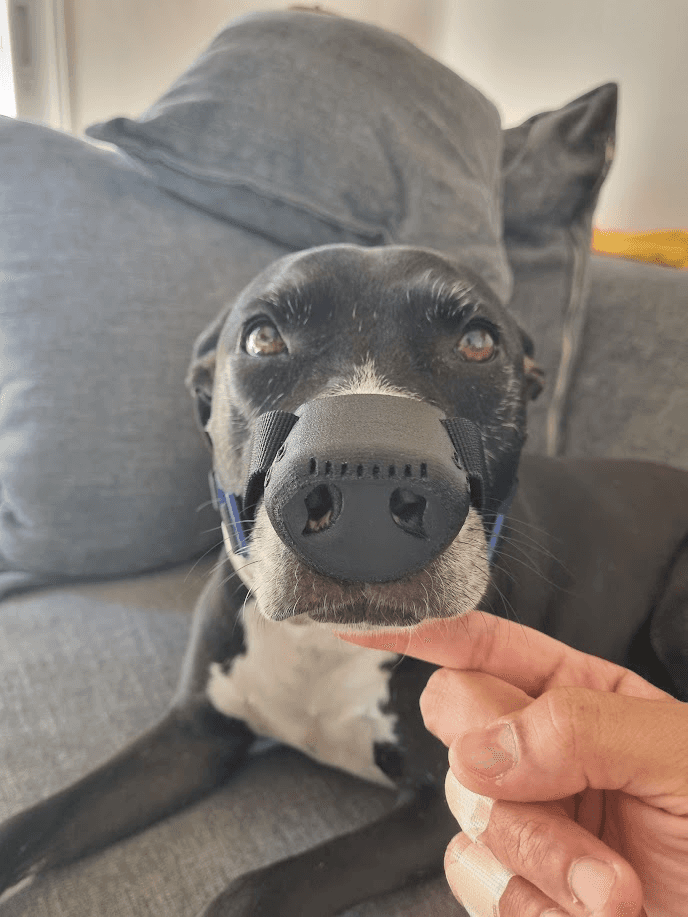
Notice how the cover sits securely on the nose with both nostrils remaining completely free and unobstructed, ensuring your dog can breathe normally.
Strap Placement
The strap system consists of three components that work together:
Main strap: Adjust with the same tightness as your dog's collar
Side straps: Fit loosely, with the fasteners (blue buckles) located evenly on the sides of your dog's face
Under-chin positioning: The black fasteners should rest comfortably under the chin, roughly aligned with the back edge of the nose
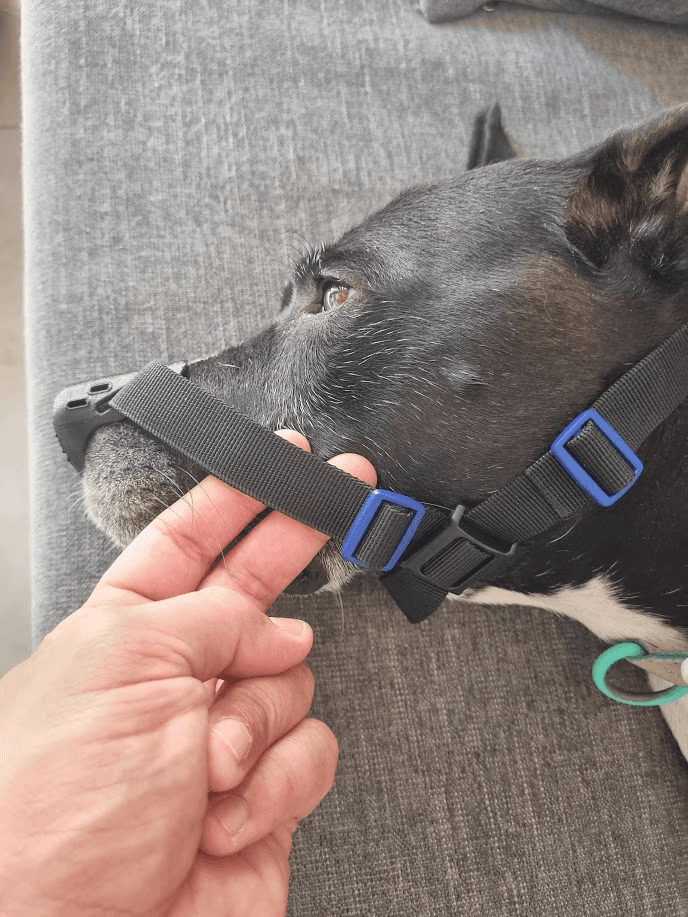
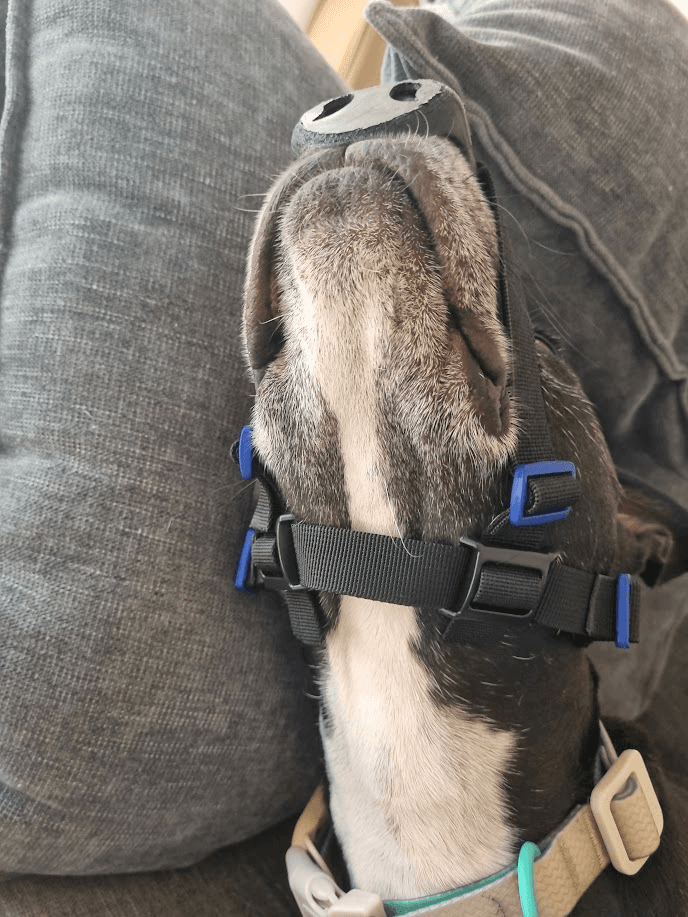
The blue buckles on the side straps allow for easy adjustment and should sit comfortably on either side of your dog's nose.
From this angle, you can see how the main strap wraps around behind the ears and how the side straps connect under the chin. The black fasteners are positioned at the bottom of the muzzle, not pulling forward or backward.
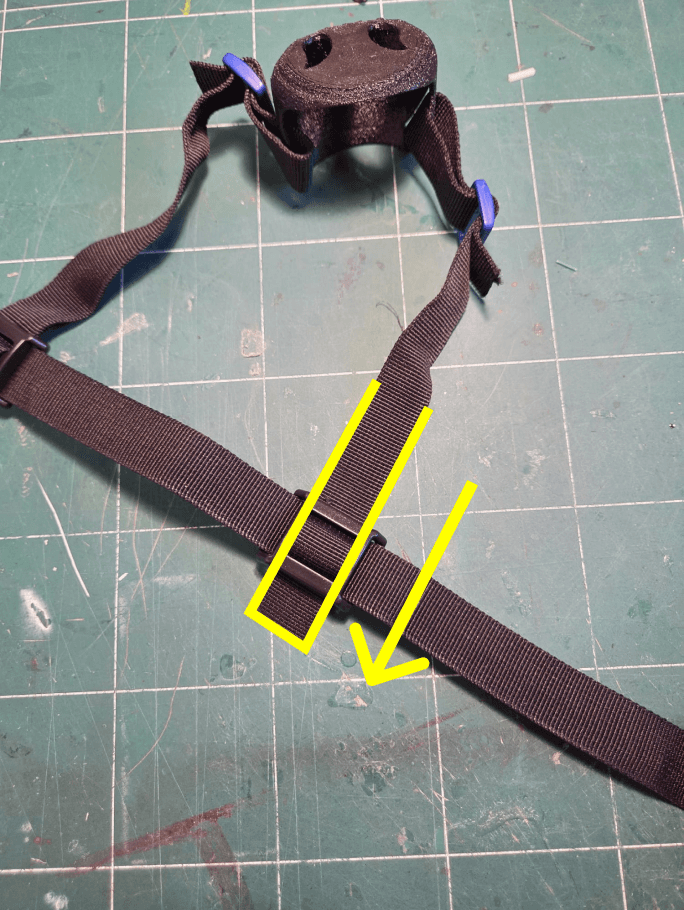
The side straps are designed so you can pull the end of the strap to fit the length easily.
Once you are done fitting, lock the end of the strap through the fastener so it won't slip.

Key Balance
Finding the right tension is crucial:
Loose enough: Not to pull on the dog's nose or create pressure points
Tight enough: That the cover won't fall off accidentally or if your dog tries to remove it
Side straps should not allow you to pull and remove the SnoutCover from the front, but they should remain loose enough not to restrict your dog's jaw movement.
From the front, you can see how the cover protects the nose bridge while leaving the nostrils completely open for breathing. Notice how Billie's eyes are clear and comfortable, with no signs of the straps being too tight.
Adjusting for Comfort
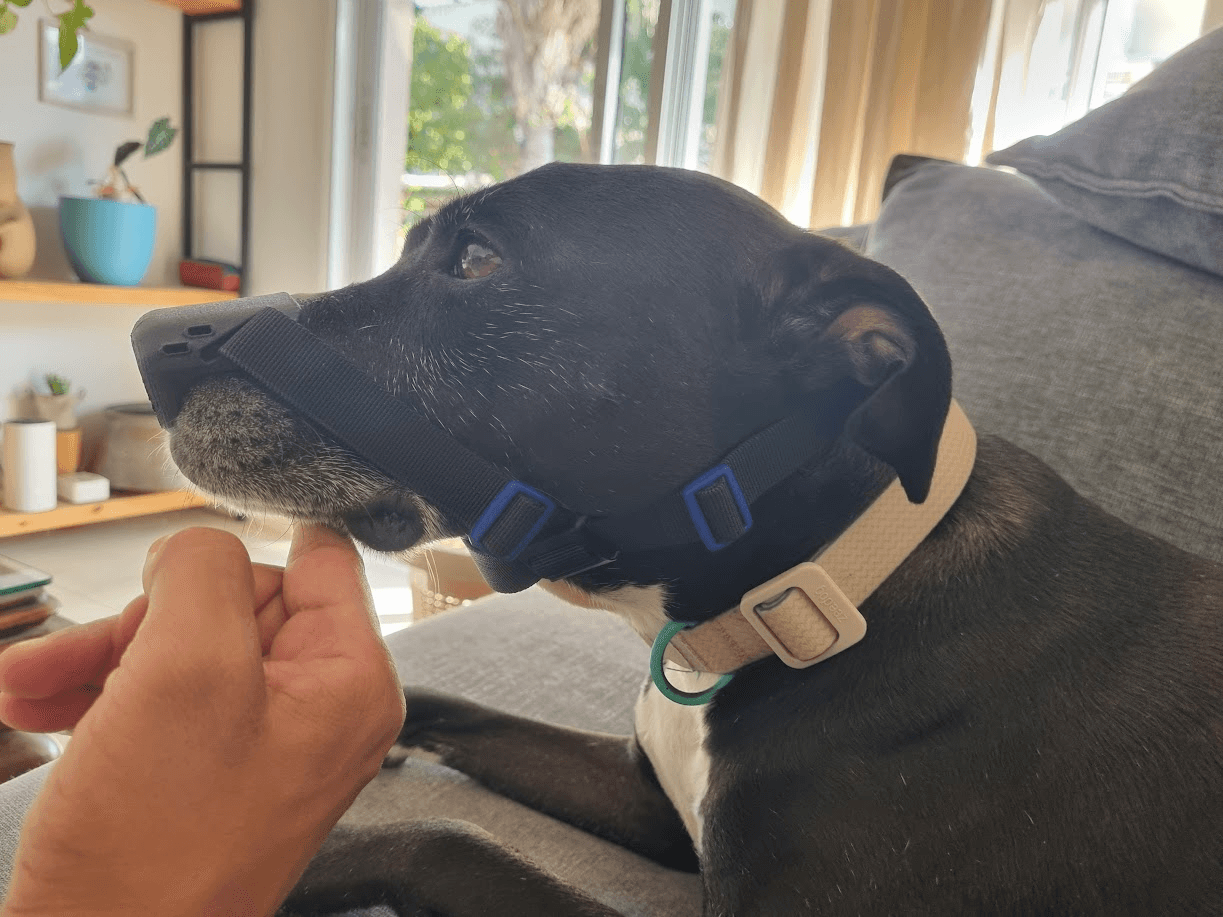
This profile view shows the ideal fit - the cover sits naturally on the nose without pulling or shifting, and the straps follow the contours of the face comfortably.
Too Loose
SnoutCover shifts or moves during normal activity
Dog can easily rub it off with their paw or against furniture
Too Tight
Leaves marks on fur or skin after removal
Dog is constantly trying to remove it or seems uncomfortable
Restricts normal head movement or jaw function
Just Right
Stays in place during normal activity like walking and playing
Your dog can ignore it after an initial adjustment period
You can fit one finger between the strap and your dog's fur
No marks visible on fur or skin when removed after use
Proper ventilation maintained with nostrils completely unobstructed
Tips for Success
Start gradually: Let your dog get used to wearing SnoutCover for short periods before extending wear time
Check positioning regularly: Especially during the first few days, verify that the cover hasn't shifted
Monitor for comfort: Watch for any signs of discomfort or skin irritation
Adjust as needed: As your dog becomes accustomed to wearing SnoutCover, you may need to fine-tune the fit
Keep nostrils clear: Always ensure both nostrils remain fully open and unobstructed
Known Issues
These are the most common fitting challenges reported by SnoutCover users, along with what causes them and how to fix them.
Cover slides upward when the dog licks
Problem:
When a dog licks their nose, the tongue can push the cover upward, partially blocking the nostrils. This is the most commonly reported issue.
Fix:
Move the side fasteners (black buckles) slightly toward the centerline of the neck - this creates more resistance against upward movement. Make sure the cover isn't sitting too low on the nose to begin with, as it will have more room to shift.
Cover shifts forward during movement
Problem:
The cover fits well when the dog is resting, but slips forward when they stand up, walk, or shake their head.
Fix:
Move the side fasteners toward the jaw joints. This anchors the cover further back and reduces forward slippage. It also helps to ensure the cover isn't pressing against the tip of the nose - contact pressure gives the dog something to push against.
Strap loosens or pulls free from the fastener
Problem:
Some dogs - especially paw-active or persistent ones - manage to pull the strap out of the side fastener, or gradually loosen it over time.
Fix:
Once you've found the right strap length, lock it in place by threading the strap back through the top slot of the fastener (after the first pass). This holds the length without restricting the ability to re-adjust later.
Dog removes the cover using their paw
Problem:
The dog swipes at the cover with their paw and pulls it off, even when the strap tension seems correct.
Fix:
Check that the cover isn't pressing against the nose - pressure is the main motivation to remove it. Apply the strap lock technique above to prevent the strap from loosening under force. For persistent cases, gradual reward-based training is the most effective long-term solution. See the Training Guide for a step-by-step approach.
Dog freezes or refuses to walk while wearing SnoutCover
Problem:
Some dogs stop moving entirely when the cover is first put on, treating it as a form of restraint or punishment. This is a behavioral response, not a fit problem.
Fix:
This resolves with time and positive association. Keep early sessions short, pair the cover with high-value rewards, and don't force movement. Most dogs work through the freeze within a few sessions. See the Training Guide for more detail.
A few things to keep in mind: if you're experiencing multiple issues at once, always start by re-checking strap placement and cover position before adjusting tension. Most issues trace back to fastener positioning rather than strap tightness.
